Role
Design Engineer
Industry
Craft Tools · Creative Technology
Duration
4 months
Fleck
A smart glaze-mixing tool that makes an invisible studio variable visible.
Role
Design Engineer
Industry
Craft tools, creative technology
Duration
4 months

Glazing is one of the most unpredictable stages of ceramics.
Even experienced potters struggle to know whether a glaze is actually mixed—leading to failed pieces, hesitation to experiment, and inconsistent results.
As one studio owner put it:
“It’s not a visual mix, only a molecular mix.”
Studio Owner, Providence RI
How might we give potters confidence that their glaze is ready, without disrupting the traditions of the studio?
Glazing fails because the variables are invisible.
After interviewing potters across studio, production, academic, and independent contexts, one theme emerged: glazing fails because variables are invisible. Fleck addresses this gap by making hidden process variables visible and actionable.

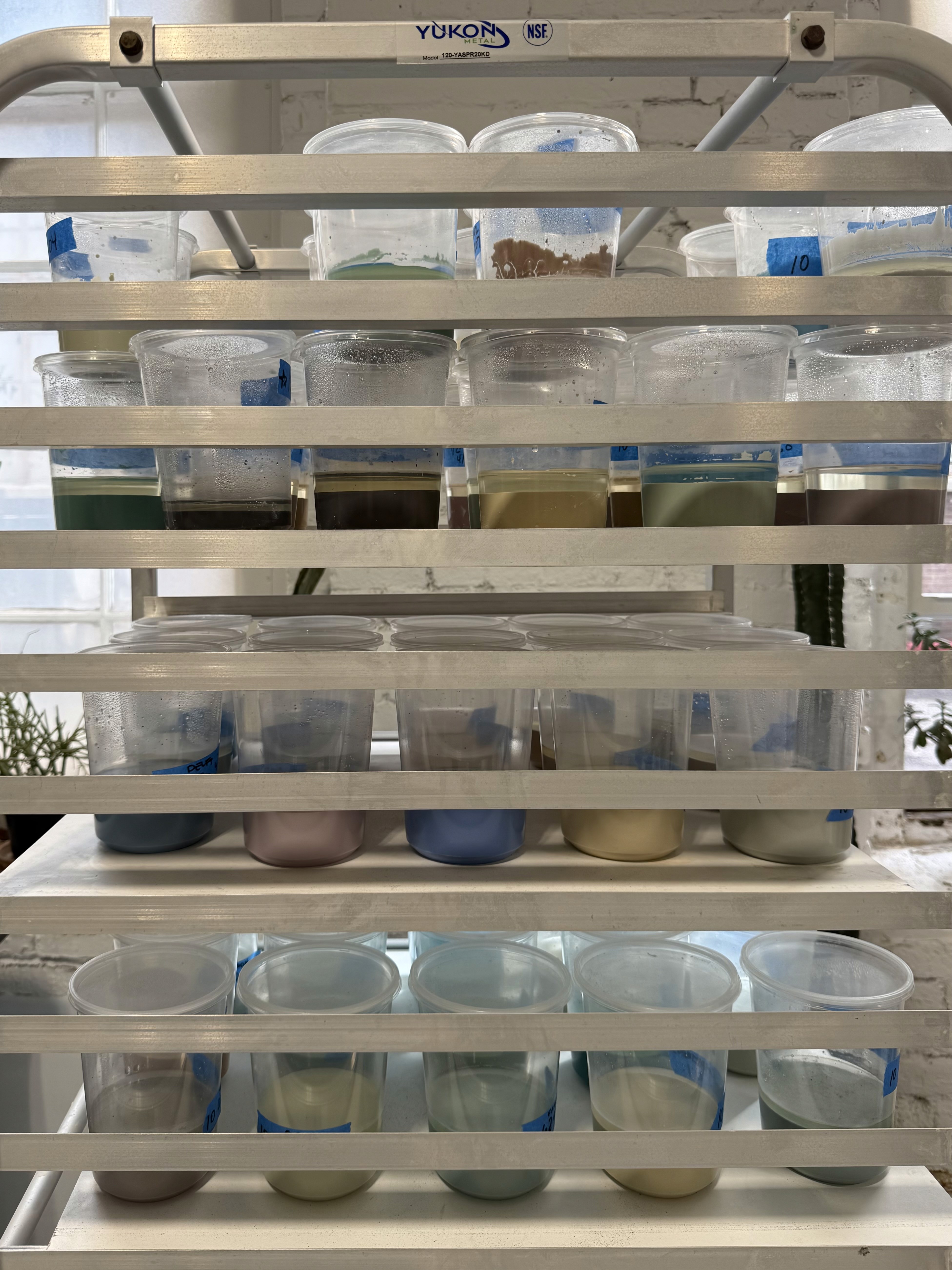
Test glazes from studio visits.
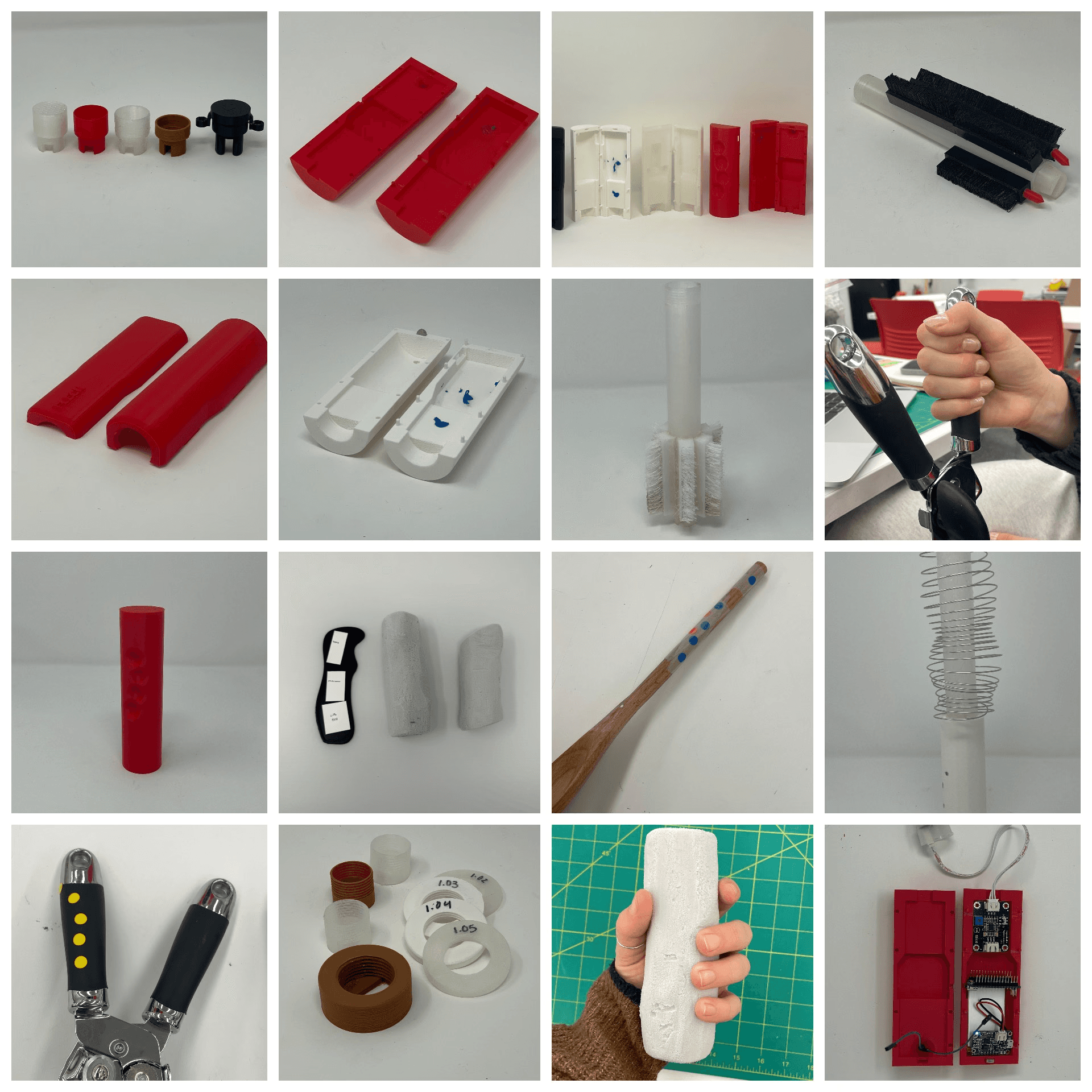
Prototyping and form exploration.
One button, one light, three states.
The LED is also the power button. It flashes green briefly on power-up, blinks blue once the tool is in the glaze and mixing, and holds solid green when the mixed state is reached.
Power-up
A brief green flash
Mixing
Blinking blue.
Mixed
Solid green, held once the mixed state is reached.
The button: a green flash on power-up, then blinking blue while mixing.
The microscope showed that mixing time matters.
To verify true glaze incorporation, we compared samples from the same batch of glaze before and after mixing with Fleck. Under the microscope, mixing changed the glaze at a molecular level, with the emphasis on mixing for the right amount of time.

Samples from the same batch of glaze, unmixed and mixed.
Balancing playfulness and reliability.
The design balances playfulness and reliability. This reflects the dual nature of ceramics as both a creative and technical practice. Soft forms and glaze-inspired colors make Fleck feel natural in the studio, while removable bristles, waterproofing, and thoughtful detailing emphasize practicality.
At the same time, Fleck is a dependable tool, consistent in form, minimal in interaction, and clear in feedback. By controlling one variable, Fleck enables experimentation without limiting creative freedom.

Under the hood
Fleck uses a turbidity sensor to detect particle-level mixing and communicates readiness through a simple LED indicator.

Test setup with the turbidity sensor in a cup of glaze.