Role
Design Engineer
Industry
Craft Tools · Creative Technology
Duration
4 months
CoyoteSat
A student-built CubeSat mission focused on studying cosmic radiation in low-Earth orbit.
Role
Lead Structural Engineer
Industry
Aerospace
Duration
2.5 years

Studying cosmic radiation from low-Earth orbit.
Creating hands-on aerospace experience for college students in NYC by designing and manufacturing a cube satellite (CubeSat) that detects gamma rays in low-Earth orbit using a modified version of the Cosmic Watch Muon Detector. This will allow us to further understand the effects of cosmic radiation on small spacecraft, and how we can develop lighter and resistant materials for in-space usage.
Balancing structural integrity, budget, and strict guidelines.
Our primary challenge was balancing structural integrity with budget constraints and strict guidelines. CubeSat development can cost $3,500-$50,000. To optimize resources, we used affordable, durable materials, that perform well in the space environment, such as aluminum 6061 and machined as many parts as we could using CNC machines and water jets in NYU’s MakerSpace.
We iterated on numerous 3D-modeled designs, prototyped, performed finite element analysis, handled sub-system integration, conducted multiple rounds of vibration and thermal tests, and manufactured the final version of the CoyoteSat.

Building and testing CoyoteSat.
Exploration and tradeoffs.
Loose or lost screws due to launch vibration are one of the most common failure points in CubeSat design. I started exploring whether we could eliminate fasteners entirely. I took inspiration from Japanese wood joinery — interlocking joints that require force to pull apart, which wouldn’t occur during launch. It was cheaper, theoretically more stable, and more interesting from a design standpoint.
But constraints ruled it out. Interlocking metal joints need very precise tolerances to survive vibration testing, and I wasn’t confident the machines we had access to could hold them. There was also a bake-out testing concern where any fill material in the gaps could burst under thermal vacuum. So we went back to the traditional NASA CubeSat design, added thread-locking adhesive, and moved on. The right call, even if the other idea was more novel.
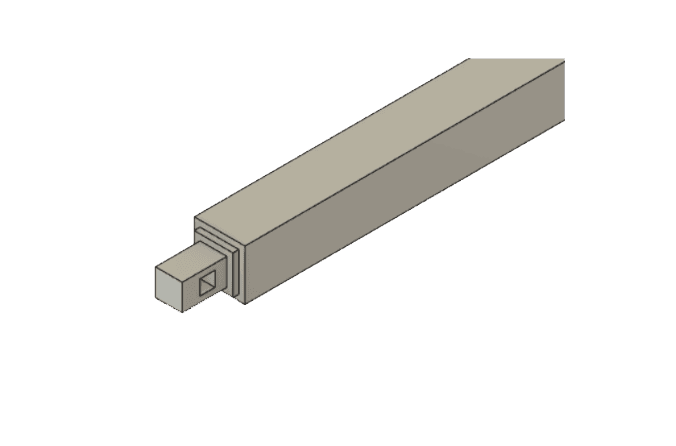
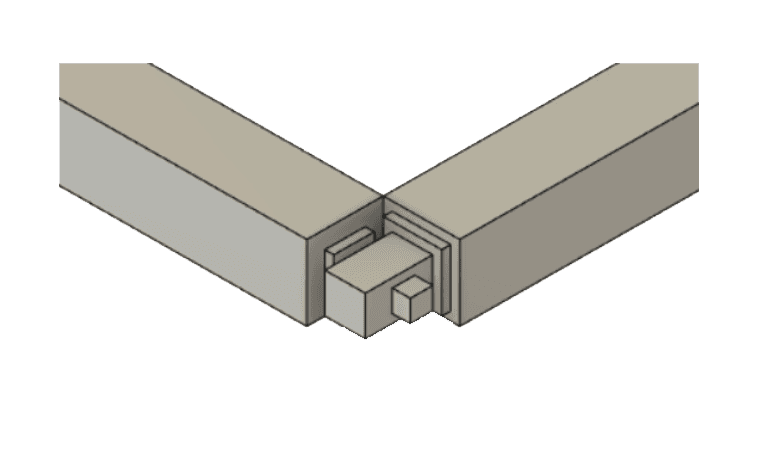
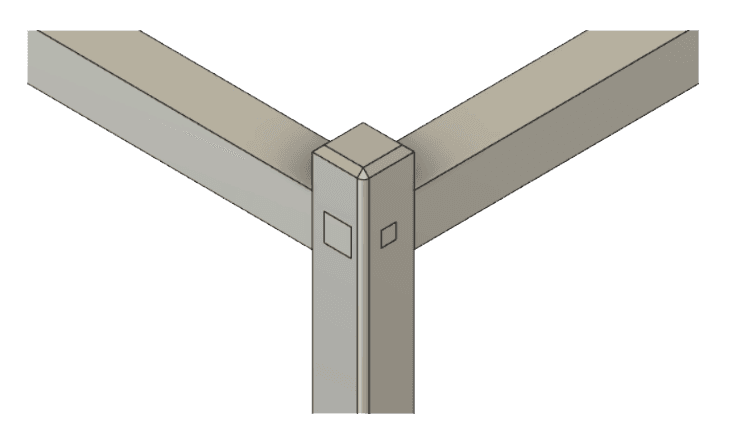
Interlocking joint study, from a single rail end to an assembled corner.